
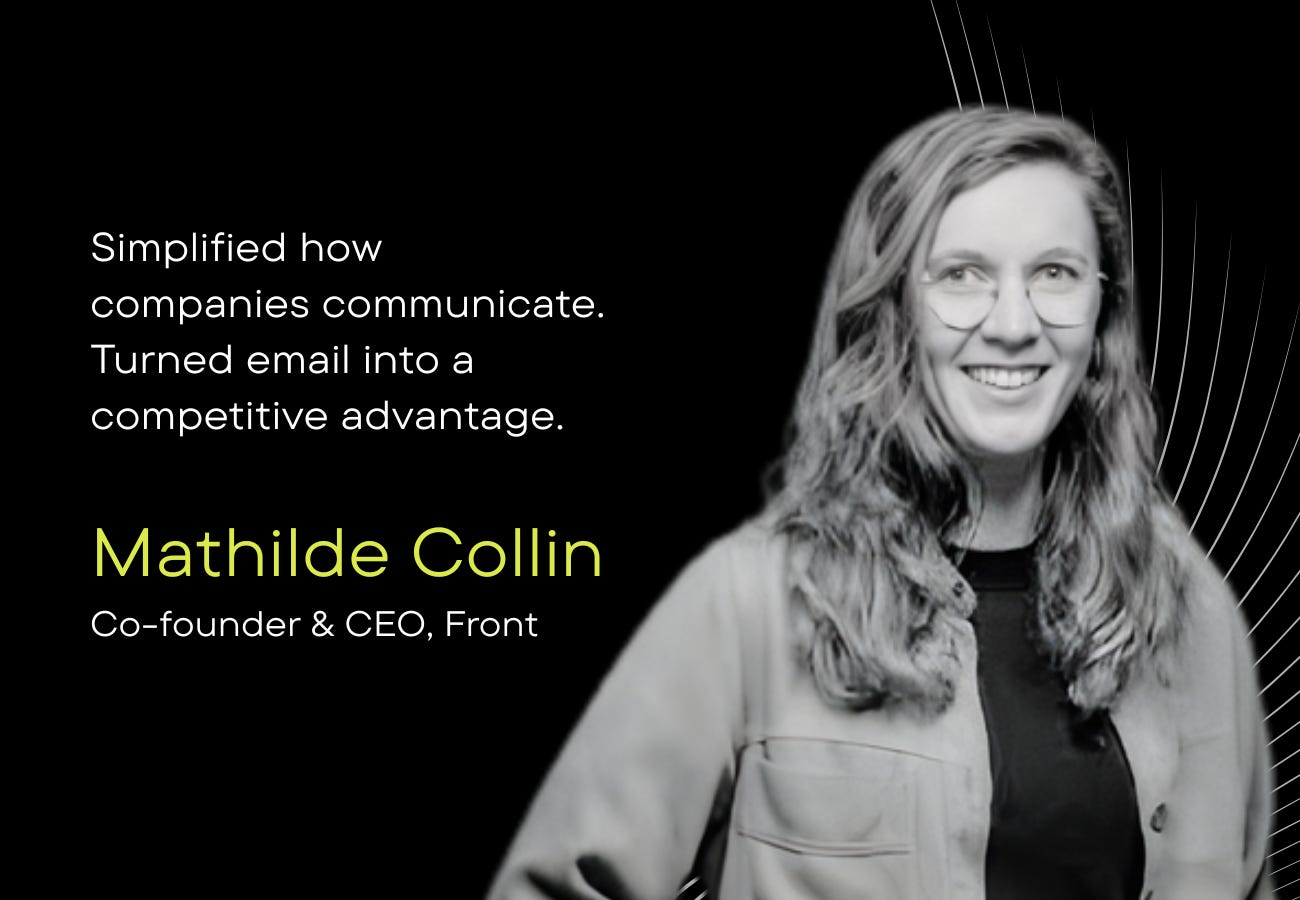
How Mathilde Collin Built a Global B2B Brand by Making Email Feel Human
From bootstrapping in Paris to scaling Front into a category leader, this founder proved that simplicity can beat complexity. (5-minute read)

Billions of emails are sent every day.
Almost none are designed for teams.
Mathilde Collin saw that gap and built Front.
She helped redefine how teams communicate with customers.
She challenged the idea that business communication had to feel cold, robotic, and disconnected.
That stood out to me.
Because most software tries to automate relationships.
Front tries to improve them.
And that difference shaped everything about how the company grew.
Mathilde did not start with technology.
She started with a problem:
Why does internal communication feel easy, but external communication feels broken?
That question built a billion-dollar company.
And what I find fascinating is how often billion-dollar companies start with questions that feel almost obvious in hindsight.
Simple frustrations.
Daily inefficiencies.
Things everyone notices but no one prioritizes fixing.
Sometimes the biggest opportunities are hiding inside small annoyances we experience every single day.
Mathilde saw friction where others saw routine.
She paid attention to something most people had learned to tolerate.
That is often where real innovation begins.
From Paris to Silicon Valley
Mathilde grew up in France and studied engineering.
She started her career at Palantir, one of the most technical companies in Silicon Valley.
But instead of staying in enterprise infrastructure, she noticed something simpler.
Teams were spending hours inside email.
Customer conversations were scattered.
Accountability was unclear.
Important messages slipped through cracks.
Email was still the default communication tool for business.
But it was not built for teams.
That insight became Front’s starting point.
Instead of replacing email, Mathilde wanted to improve it.
That was a bold decision.
Because founders are often told:
“Build something new.”
“Disrupt the category.”
“Kill the old system.”
Mathilde did the opposite.
She upgraded the system that everyone already used.
That made adoption easier.
That made the product obvious.
That made growth faster.
The Simple Idea That Was Hard to Execute
Front launched in 2014 with a simple promise:
Bring team collaboration into email.
Shared inboxes already existed.
Customer support tools already existed.
But most of them felt transactional.
Front focused on clarity.
Teams could:
Assign emails
Comment internally
See conversation history
Collaborate without forwarding endless threads
Email became a workspace.
Not just a tool.
This is a pattern strong founders understand:
Big opportunities often hide inside boring categories.
The email looked crowded.
But it was still broken.
Mathilde did not invent a new behavior.
She improved existing behavior.
That is often easier to scale.
Design as a Competitive Advantage
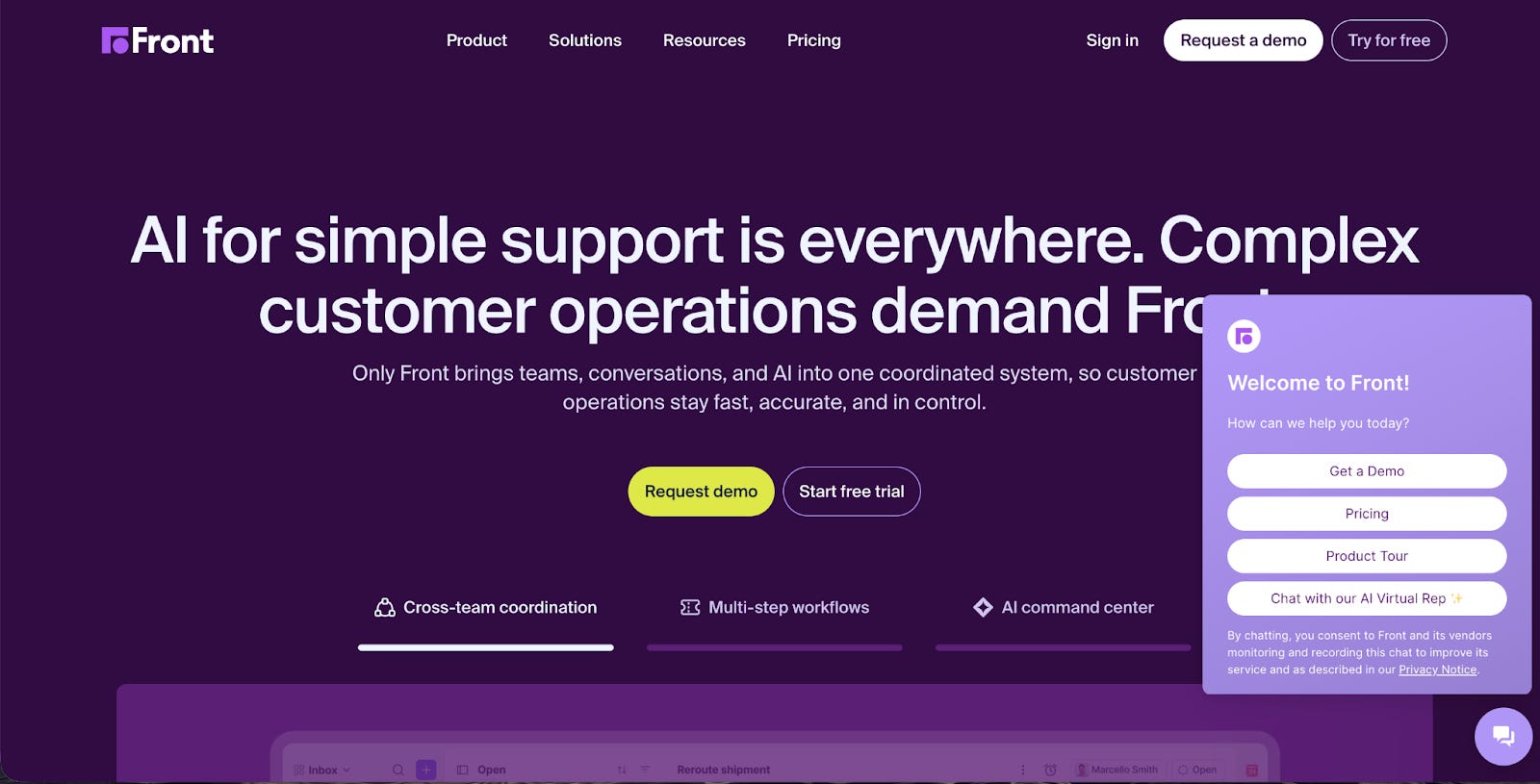
One thing that stands out about Front is how much attention Mathilde placed on product design.
Most enterprise tools prioritize features.
Front prioritized experience.
The interface felt clean.
The workflows felt intuitive.
The product felt modern.
That helped the company expand beyond support teams into sales, operations, and customer success.
Good design is not decoration.
Good design reduces friction.
Less friction means faster adoption.
Faster adoption means lower customer acquisition cost.
That becomes a growth engine.
Mathilde understood that early.
Fundraising With Conviction
Front raised funding from some of the best investors in Silicon Valley, including Sequoia Capital and other top-tier firms.
But what is interesting is not the names.
It is the positioning.
Front was not trying to become another help desk software.
Mathilde positioned Front as a new category:
Customer communication infrastructure.
That framing matters.
Because investors do not just fund products.
They fund narratives.
Mathilde showed that:
Customer relationships are a competitive advantage.
Communication quality affects retention.
Retention drives revenue.
Front was not selling inbox software.
It was selling better customer relationships at scale.
That story resonated.
Scaling Without Losing Focus
As Front grew, many competitors expanded aggressively into dozens of features.
Mathilde stayed focused on communication workflows.
That discipline helped the company maintain clarity in the market.
Many startups lose momentum because they try to become everything.
Front stayed anchored in its core use case:
Make external communication as collaborative as internal communication.
That clarity made decision-making easier.
It also helped the team prioritize better.
Focus compounds.
Leadership Style That Emphasizes Transparency
Mathilde is known for writing openly about leadership challenges.
She has shared lessons about:
Imposter syndrome
Scaling culture
Managing growth pressure
Building confidence as a first-time CEO
That transparency helped her connect with other founders.
Especially female founders navigating Silicon Valley.
Representation matters.
When founders share honest experiences, they reduce the invisible barriers for others.
Mathilde became an example of what modern leadership can look like:
Ambitious but grounded
Data-driven but human
Confident but reflective
That balance builds trust.
Trust builds strong teams.
Strong teams build durable companies.

Building a Category, Not Just a Tool
Front sits between multiple categories:
Help desk software
CRM
Team collaboration tools
Communication platforms
That positioning gives the company strategic leverage.
Because it expands the total addressable market.
But it also requires strong messaging clarity.
Mathilde consistently emphasized one core idea:
Communication is the backbone of customer experience.
Companies invest heavily in marketing and sales.
But the actual customer relationship often lives in the inbox.
That is where trust is built.
That is where problems are solved.
That is where loyalty is created.
Front improves that moment.
That is powerful.
The Real Lesson
Mathilde Collin did not just build email software.
She built alignment between teams and customers.
She proved that:
Big opportunities exist inside everyday workflows
Improving existing behavior can scale faster than creating new behavior
Design can be a growth advantage
Category positioning shapes investor perception
Transparent leadership builds stronger companies
Communication quality impacts revenue more than most founders realize
She also showed something important:
You do not always need a revolutionary idea.
Sometimes you need a better version of something everyone already uses.
Email existed for decades.
But collaboration inside email did not.
Mathilde saw that gap.
Then built the company to fill it.
If You’re Building Today
If you are a founder or operator, study Mathilde Collin.
Study how Front positioned itself between categories.
Study how product simplicity supported adoption.
Study how design supported growth.
Study how messaging shaped investor confidence.
Because one of the strongest insights from her journey is this:
Innovation does not always mean inventing something new.
Sometimes it means improving something essential.
That can be just as powerful.
And often more durable.
— Peter
If you liked this, you’ll love what’s next.
Startup Anatomy lands in your inbox three weeks per month, packed with real stories, raw lessons, and practical takeaways.
No gurus. No hype.
Just real founders.
Real decisions.
Real lessons that compound.
Subscribe now.